Culture & Traditional Arts
Immerse yourself in Japan's rich cultural tapestry — centuries-old practices still thriving today.
Chado — The Way of Tea
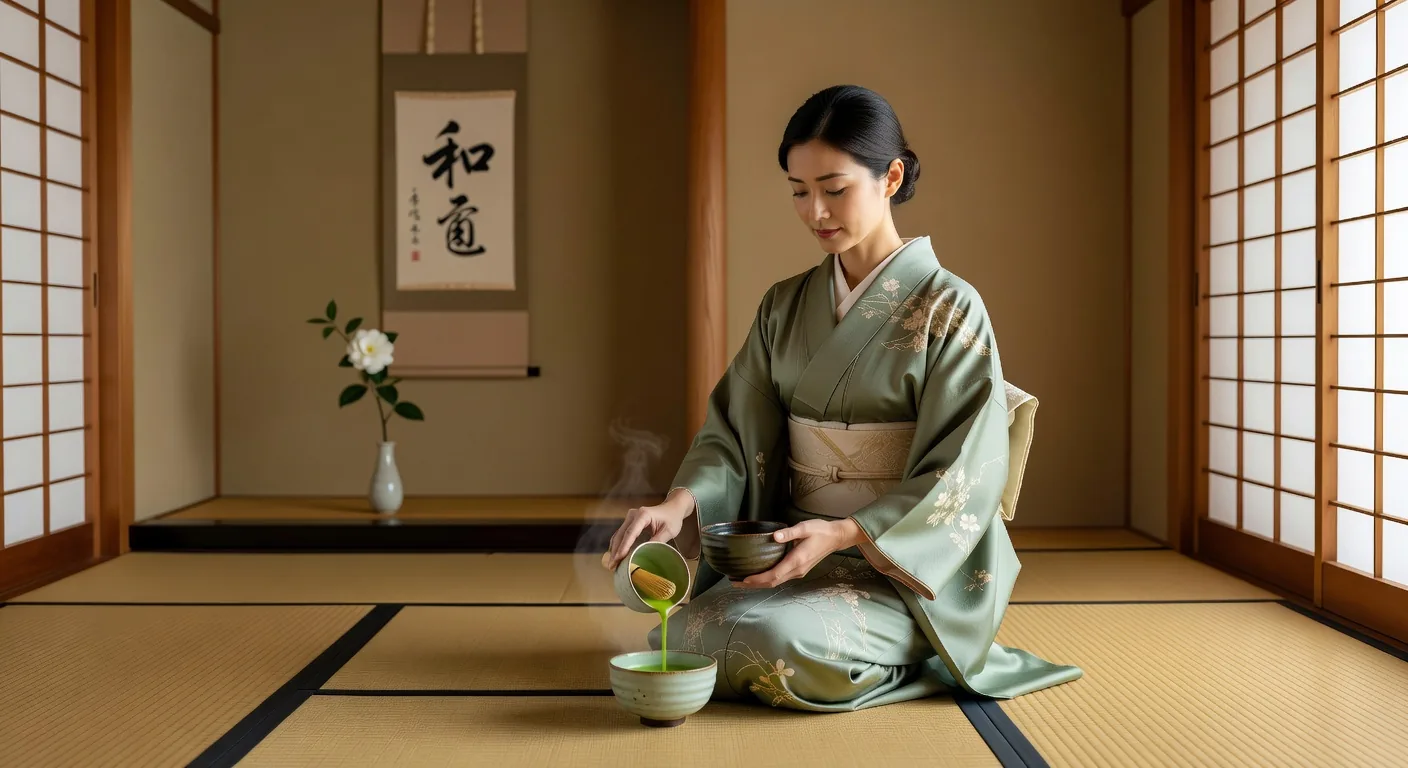
The Japanese tea ceremony, known as Chado or Sado (茶道), is far more than a method of preparing a drink. It is a holistic art form that embodies four core principles introduced by the tea master Sen no Rikyu in the 16th century: Harmony (wa), Respect (kei), Purity (sei), and Tranquility (jaku).
The practice finds its origins in the 9th century when Buddhist monks returned from China with tea seeds. By the Muromachi period (1336–1573), the ritual had evolved into a sophisticated art embraced by samurai, nobles, and Zen practitioners alike. Sen no Rikyu codified the ceremony into the form still practiced today, emphasising simplicity, mindfulness, and the appreciation of impermanence — a philosophy known as wabi-sabi.
A full ceremony, called chaji, can last up to four hours and includes a light meal, thick matcha (koicha), and thin matcha (usucha). Guests follow strict etiquette: bowing upon entering the tea room, turning the bowl clockwise before sipping to avoid drinking from its "front," and admiring the host's utensils as works of art in themselves.
The tea room itself — often a small rustic structure called a chashitsu — is designed to inspire humility. The low entrance (nijiriguchi) requires all guests, regardless of social rank, to bow as they enter.
The Matcha Connection
Japan's renowned matcha (抹茶) originates from Uji, near Kyoto, where tea plants are shade-grown for several weeks before harvest. This process boosts chlorophyll and amino acid (L-theanine) content, producing the vivid green colour and smooth, umami-rich flavour prized in ceremonies. Today Uji remains the gold standard for ceremonial-grade matcha worldwide.
Where to Experience Tea Ceremony
- Kyoto Urasenke Foundation, En tea house in Arashiyama, and numerous machiya townhouse experiences in Higashiyama.
- Tokyo Hamarikyu Gardens tea house, Happo-en Garden, and the Tokyo National Museum's Ikebana & Tea experiences.
- Nara Isuien Garden — a centuries-old garden with an atmospheric sukiya-style tea room overlooking the pond.
Traditional Arts & Crafts
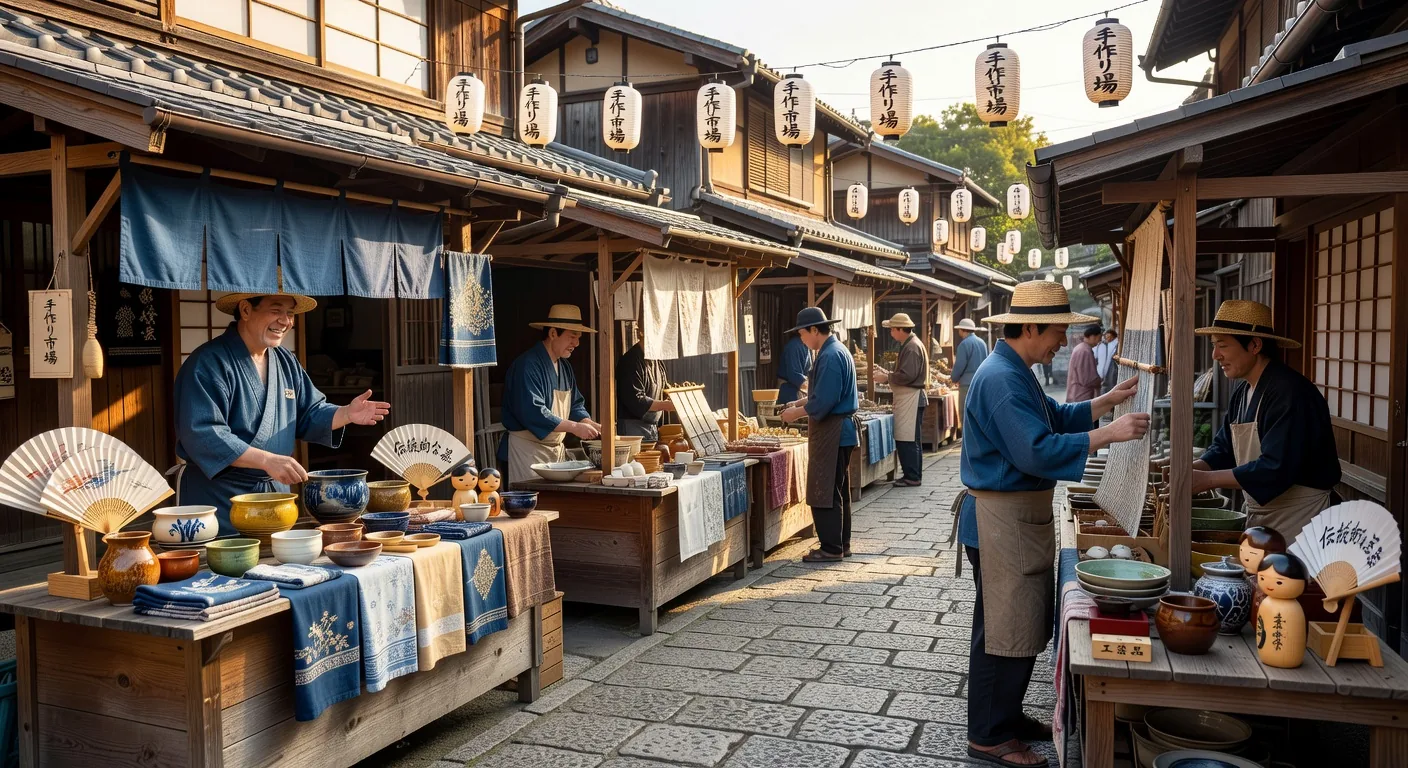
Japan's craft traditions represent some of the world's most refined applied arts. Many techniques are passed down through generations of shokunin (artisans) who dedicate their lives to mastering a single discipline. The government designates exceptional practitioners as Living National Treasures (Ningen Kokuho).
Ikebana
The living art of Japanese flower arrangement. Unlike Western floristry, Ikebana is deeply philosophical — each arrangement expresses the harmony of heaven, earth, and humanity through asymmetry and empty space.
Origami
The ancient art of paper folding transforms a single square sheet into intricate sculptures — from the iconic crane (orizuru) to complex insects and portraits. A symbol of patience and precision.
Pottery (Raku-yaki)
Born in 16th-century Kyoto specifically for the tea ceremony, Raku pottery is hand-moulded rather than wheel-thrown, fired at low temperatures, and celebrated for its organic imperfections and rough tactile beauty.
Lacquerware (Urushi)
Urushi lacquerware involves applying dozens of layers of natural sap from the urushi tree, creating a luminous, durable finish. The Wajima region in Ishikawa is renowned for its extraordinary lacquerware tradition spanning 1,000 years.
Kanazawa Gold Leaf
Kanazawa produces 99% of Japan's gold leaf (kinpaku). Artisans beat gold into translucent sheets just 0.0001mm thick — used to decorate temples, lacquerware, ceramics, and even food. The Higashi Chaya district has gold leaf workshops open to visitors.
Textile Dyeing (Shibori)
Shibori is Japan's ancient resist-dyeing technique — the ancestor of tie-dye. Cloth is folded, twisted, bound, or clamped before dyeing to create intricate organic patterns. Arimatsu near Nagoya has practiced shibori for over 400 years and remains the craft's capital.
Performing Arts
Japan's performing arts are among the most stylised and visually stunning in the world. Rooted in Shinto ritual, Buddhist philosophy, and aristocratic patronage, these art forms have been preserved virtually unchanged for centuries.
Kabuki (歌舞伎)
Originating in early 17th-century Edo (Tokyo), Kabuki combines extravagant costumes, elaborate make-up (kumadori), stylised movement, and dramatic storytelling. All roles were historically performed by male actors (onnagata play female parts). Kabuki-za Theatre in Tokyo's Ginza district stages performances year-round.
Noh (能)
The world's oldest continuously performed theatre tradition, dating from the 14th century. Noh is deliberately slow and meditative, performed in masks on a bare hinoki-wood stage. Themes often draw from classical literature, Shinto mythology, and the spirit world. UNESCO recognised Noh as an Intangible Cultural Heritage in 2001.
Bunraku (文楽)
Japan's traditional puppet theatre uses elaborate, half-life-sized puppets manipulated by up to three visible operators per puppet. Stories are narrated by a chanter (tayu) accompanied by shamisen music. Osaka's National Bunraku Theatre is the primary venue for this UNESCO-listed art.
Taiko Drumming (太鼓)
Taiko (drum) performances range from sacred Shinto ritual to electrifying stage spectacle. Groups like Kodo on Sado Island have taken taiko worldwide, while local festivals across Japan feature spirited taiko ensembles. Taiko workshops are widely available for travellers to try.
Where & When to Experience Performing Arts
| Art Form | Best Venue | City | Season / Notes |
|---|---|---|---|
| Kabuki | Kabuki-za Theatre | Tokyo (Ginza) | Year-round; single-act tickets available (1–2 hrs) |
| Kabuki | Minamiza Theatre | Kyoto (Shijo) | Major performances Dec; historic venue est. 1610 |
| Noh | National Noh Theatre | Tokyo (Sendagaya) | Monthly programmes; serene, unhurried experience |
| Bunraku | National Bunraku Theatre | Osaka (Nipponbashi) | Jan, Apr, Aug, Nov programmes (English earphone guides) |
| Taiko | Kodo Village | Sado Island, Niigata | Annual Earth Celebration festival in August |
| Kyogen | Kanze Noh Theatre | Tokyo (Shibuya) | Comedy interludes between Noh acts; accessible for newcomers |
Martial Arts (武道 Budo)
Japan's martial arts traditions go far beyond combat — they are philosophies of self-cultivation, discipline, and the pursuit of mastery. The suffix -do (道, "the way") signals that each art is a lifelong path of personal development as much as physical technique.
Kendo
Way of the SwordDescended from the swordsmanship of the samurai, Kendo practitioners use bamboo swords (shinai) and wear full armour (bugu). The tradition emphasises mental composure alongside technical skill. Japan has over 1.8 million active practitioners.
Try it: Observe morning practice at Tokyo Budokan or join a one-day Kendo experience in Asakusa.
Aikido
Way of Harmonious SpiritFounded by Morihei Ueshiba in the early 20th century, Aikido redirects an opponent's force rather than opposing it directly. Its circular techniques and emphasis on non-aggression reflect deep Shinto and Misogi spiritual principles. The Hombu Dojo in Tokyo's Shinjuku is Aikido's world headquarters.
Try it: Aikido World Headquarters (Hombu Dojo), Shinjuku — visitor observation and beginner classes available.
Judo
Gentle WayCreated by Jigoro Kano in 1882 from classical jujutsu, Judo was the first Japanese martial art to become an Olympic sport (1964 Tokyo Games). It focuses on throws, pins, and grappling with the principle of using an opponent's energy against them. The Kodokan Institute in Tokyo is its global home.
Try it: Kodokan Judo Institute, Bunkyo, Tokyo — open for public observation and registered training sessions.
Karate
Empty HandDeveloped in Okinawa from a fusion of indigenous fighting styles and Chinese martial arts, Karate reached mainland Japan in the 1920s. Characterised by powerful strikes, blocks, and kicks, its major styles include Shotokan, Goju-ryu, Shito-ryu, and Wado-ryu. Made its Olympic debut at Tokyo 2020.
Try it: Japan Karate Association Headquarters, Ebisu, Tokyo — public demonstration events held regularly.
Matsuri — The Festival Spirit
Matsuri (祭り) are Shinto festivals that animate Japan's calendar throughout the year. Originally religious events to honour the gods and pray for good harvests, they have evolved into exuberant community celebrations of music, dance, food, and tradition. Japan has over 100,000 festivals annually.
Gion Matsuri
Kyoto's most spectacular festival, spanning the entire month of July, culminates in two grand processions of elaborately decorated yamaboko floats. Dating back to 869 AD, it was established to appease the gods during a plague. The Yoiyama nights on July 14–16 transform the city into an open-air museum.
Aomori Nebuta Matsuri
One of Japan's three largest festivals, featuring colossal illuminated lantern floats up to 5 metres high depicting warriors, heroes, and mythological figures from Japanese history. Over 3 million visitors attend the six-day festival. Participants dance the haneto dance in colourful costumes around the floats.
Jidai Matsuri
The Festival of Ages recreates 1,200 years of Kyoto's history through a magnificent two-kilometre procession of over 2,000 participants dressed in authentic period costumes from the Meiji Restoration back to the Enryaku era. Held on October 22, Kyoto's founding anniversary.
Nikko Toshogu Autumn Festival
A spectacular procession of 1,200 people re-enacts the transport of Tokugawa Ieyasu's remains to the Toshogu Shrine in 1617. Samurai, archers on horseback, and shrine priests in ancient court dress wind through the cedar-lined avenues of Nikko's UNESCO World Heritage site.
Sapporo Snow Festival
The world's most famous snow sculpture festival transforms Odori Park into an astonishing gallery of ice and snow sculptures, some reaching 15 metres in height. International teams from over 50 countries compete alongside Japanese artists. The Tsudome site adds family snow activities.
Obon Festival
This Buddhist festival in mid-August honours the spirits of ancestors who are believed to return briefly to the living world. Families visit graves, light chochin lanterns, and participate in Bon Odori circle dances. Kyoto's Daimonji fire festival, with giant characters set ablaze on five mountain slopes, is the most dramatic Obon event.