Everything You Need to Know
Dive deep into Kyoto's world — from golden pavilions to bamboo groves, geisha districts to Nishiki Market.
Overview — The Ancient Capital
Kyoto served as Japan's imperial capital for over 1,000 years and remains the country's cultural heartland. Unlike Tokyo, which was heavily rebuilt after WWII, Kyoto preserves an extraordinary collection of traditional architecture, gardens, and living arts.
With 17 UNESCO World Heritage sites, 1,600+ Buddhist temples, 400+ Shinto shrines, and countless traditional machiya townhouses, Kyoto rewards slow exploration. Many travelers return again and again, always finding something new.
The city is famous for its geiko (Kyoto's term for geisha) and maiko (apprentice geisha), particularly concentrated in the Gion district.
Top Attractions — Must-See Sites
Kinkaku-ji (Golden Pavilion)
Three-story Zen temple pavilion covered in gold leaf, mirrored in its serene reflecting pond.
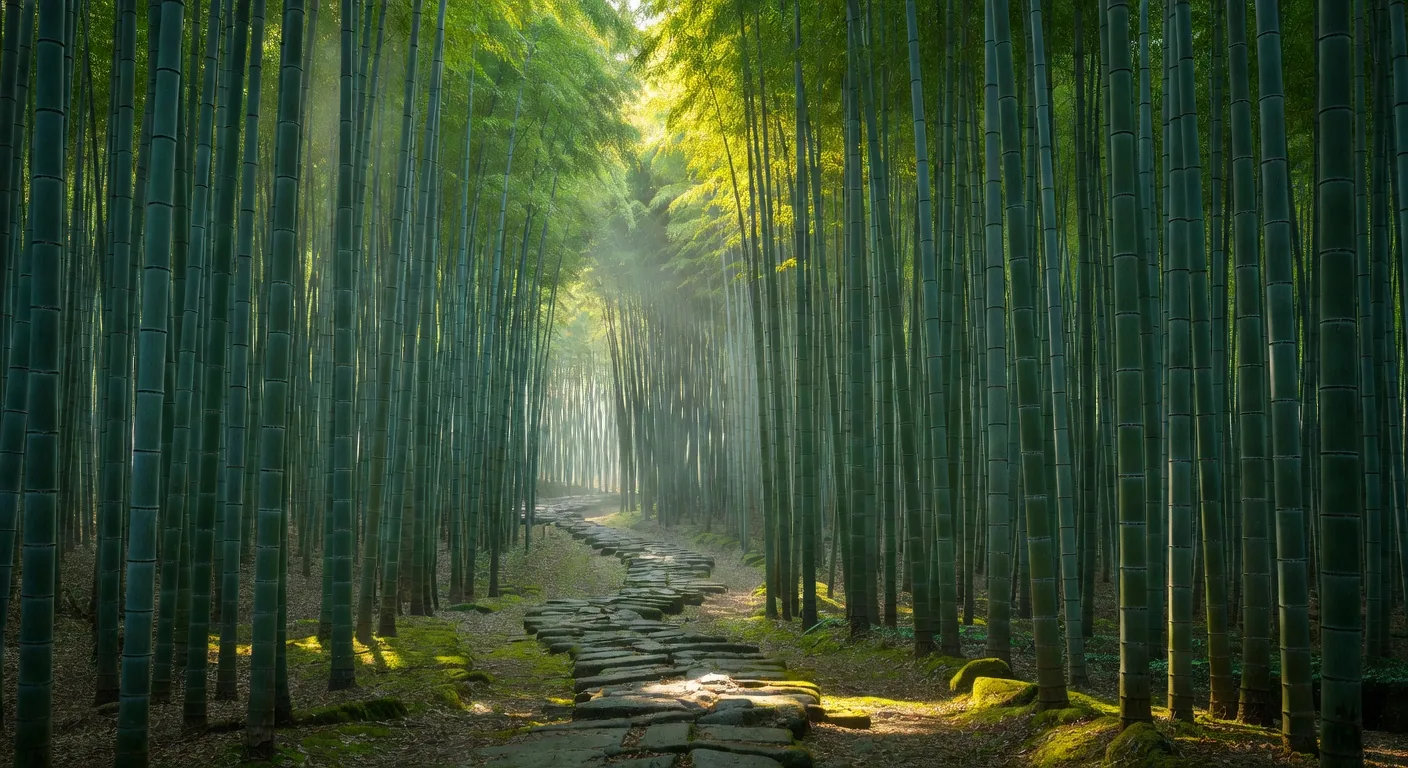
Arashiyama Bamboo Grove
Towering emerald bamboo stalks create an otherworldly tunnel of green in Kyoto's western hills.
Gion District
Kyoto's famous geisha quarter — traditional ochaya teahouses, stone-paved lanes, and flickering lanterns at dusk.
Philosopher's Path
A stone canal path lined with hundreds of cherry trees — a 2km meditative walk connecting Ginkaku-ji to Nanzen-ji.
Geisha Culture — Gion & Beyond
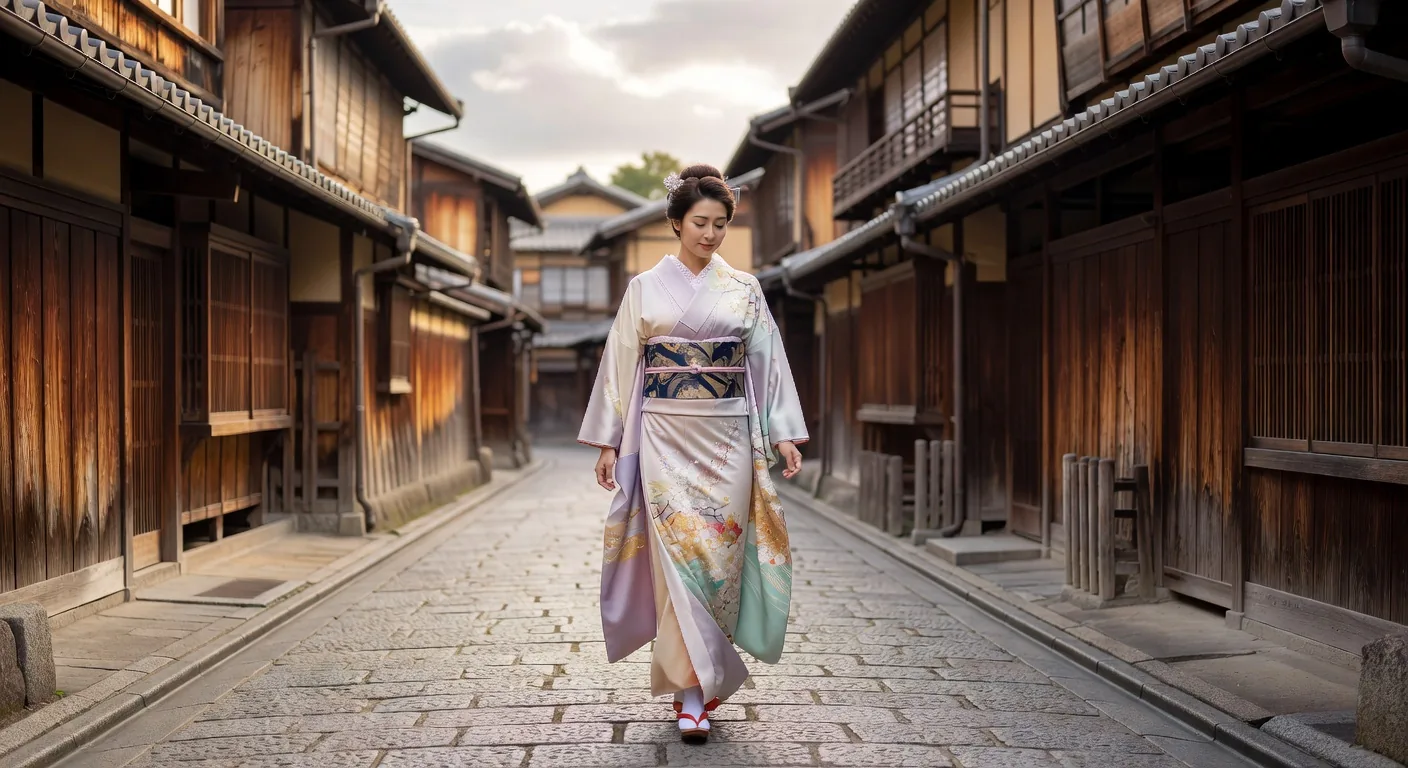
In Kyoto, geisha are called "geiko" (art woman) and their apprentices are "maiko." These artists train for years in classical music, dance, tea ceremony, and conversation — they are living embodiments of Japanese cultural refinement.
The best chance to spot a geiko or maiko is in the Gion Shirakawa and Hanamikoji Street areas, particularly at dusk when they walk to evening engagements. Please be respectful and do not obstruct them for photos.
Ozashiki Experience
Organized through licensed teahouses, an ozashiki lets guests enjoy dinner entertainment with geiko and maiko — a rare and authentic cultural experience requiring advance reservation.
- Gion Kobu — the most prestigious hanamachi district
- Gion Higashi — slightly less formal, more accessible
- Kamishichiken — oldest hanamachi, near Kitano Tenmangu
- Pontocho — narrow riverside alley, atmospheric and charming
Temples & Shrines — Sacred Kyoto
Kyoto has over 1,600 Buddhist temples and 400+ Shinto shrines. Here are the absolute must-visits:
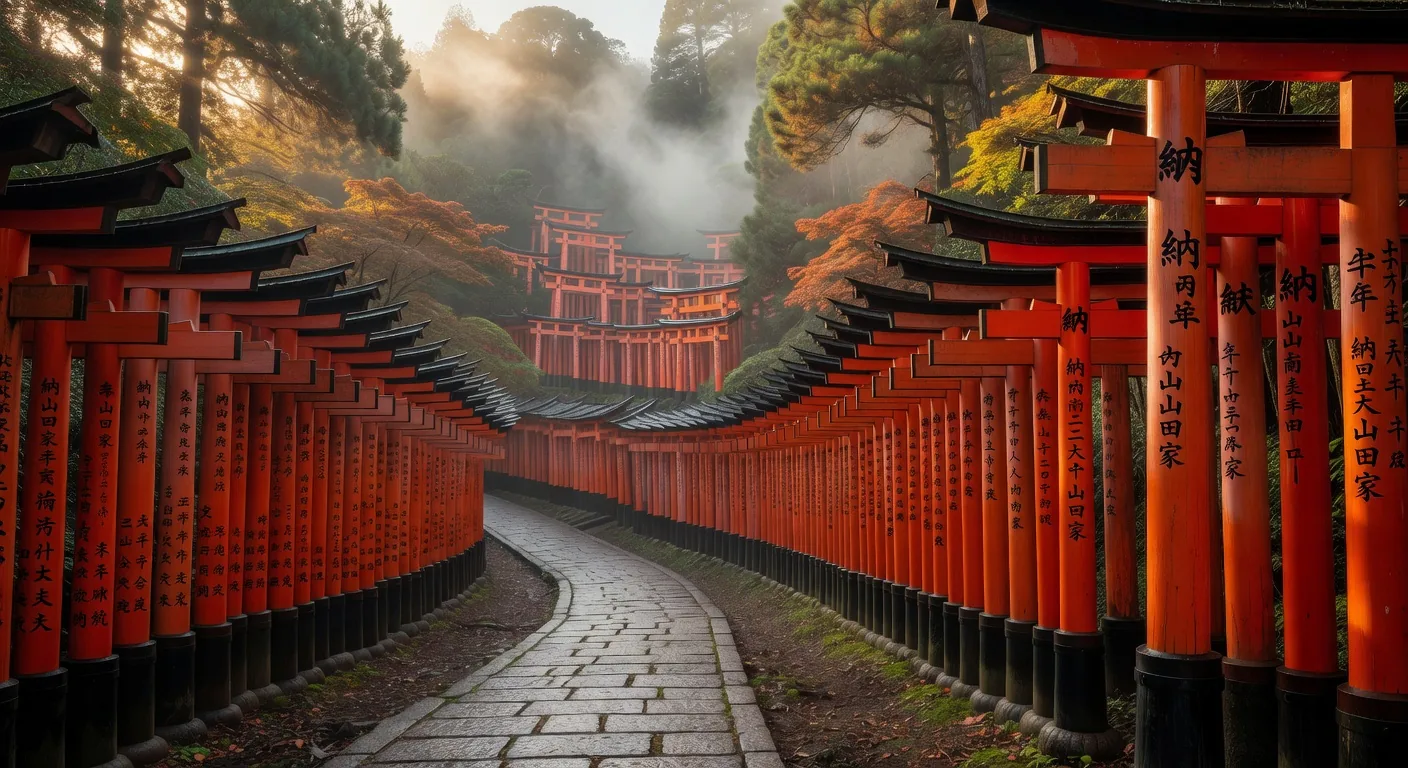
- Fushimi Inari Taisha — 10,000+ vermillion torii gates winding up the sacred Mt. Inari. Free entry, open 24 hours.
- Kinkaku-ji — The Golden Pavilion, shimmering in its reflecting pond, is perhaps Kyoto's most iconic sight.
- Ginkaku-ji — The Silver Pavilion, never actually covered in silver, anchors the start of the Philosopher's Path.
- Ryoan-ji — The world's most famous rock garden — 15 stones arranged in white gravel, deeply philosophical.
- Nijo Castle — Shogun Tokugawa's Kyoto palace with "nightingale floors" that squeak to prevent ninja infiltration.
- Tenryu-ji — UNESCO-listed Rinzai Zen temple in Arashiyama with a stunning landscape garden.
- Sanjusangen-do — Hall of 1,001 Kannon statues — one of Japan's most unforgettable interior spaces.
Traditional Cuisine — Kyoto Dining
Kyoto's cuisine (Kyo-ryori) is defined by subtlety, seasonality, and visual elegance. The city is home to exceptional kaiseki multi-course dining and Nishiki Market — "Kyoto's Kitchen."
- Kaiseki — Elaborate multi-course traditional Japanese cuisine, often featuring 10+ seasonal dishes
- Obanzai — Traditional Kyoto home-style cooking, found at Nishiki Market stalls
- Yudofu — Simple silken tofu simmered in kombu broth, eaten in temple precincts
- Matcha — Kyoto's Uji district produces Japan's finest matcha; try sweets at Nakamura Tokichi
- Kyo-wagashi — Delicate seasonal sweets sold throughout the city
- Soba — Buckwheat noodles, particularly fine in northern Kyoto
- Kyoto Pickles (Tsukemono) — Essential accompaniment to every meal
- Nishiki Market — 400-year-old covered market selling everything from fresh produce to street snacks
Nishiki Market — Kyoto's Kitchen
Stretching five blocks through central Kyoto, Nishiki Market has served the city since the 14th century. Its narrow covered arcade houses over 130 shops and restaurants selling everything from fresh tofu and pickled vegetables to grilled seafood on sticks.
- Open daily, roughly 9am–6pm (some shops close Wednesdays)
- Located one block north of Shijo Street, between Teramachi and Nishikikoji
- Sample tako tamago (octopus stuffed with a quail egg), mochi, and fresh yuba
- Excellent place to buy high-quality Japanese knives and cookware